Run in the cloud with molab
molab is a free cloud-hosted marimo notebook environment. Notebooks run on powerful compute, with generous CPU, RAM, and GPUs. molab is designed for sharing and is integrated with GitHub; notebooks are public but undiscoverable by default.
Contribute to our community gallery!
We welcome submissions to our curated community gallery. To propose an example, share your notebook on socials and tag us.
Highlights.
- ☁️ Run on powerful compute, including NVIDIA GPUs
- 🤖 Pair with coding agents like Claude Code, or use built-in AI assistance
- 🪞 Mirror notebooks from GitHub, with GitHub as the source of truth
- 🔗 Share open-in-molab badges
- 🎞️ Share as interactive slides or data apps
- 🌐 Embed interactive notebooks in your own webpages
- 📦 Install packages with a built-in package manager
- 🛢️ Use a limited amount of persistent storage per notebook
- 📄 Export to PDF
- 📥 Run notebooks on your machine
Compute
molab notebooks run on cloud compute, giving you the full power of Python on a traditional server. By default, each notebook runs with 4 CPUs and 32 GB of RAM.
GPUs. You can attach an NVIDIA RTX Pro 6000 Blackwell GPU — with 96 GB of VRAM and 125 TFLOPS — to any notebook. Toggle the GPU by clicking the notebook specs button in the app header. GPUs make it possible to finetune open-source models, train and run modern ML workloads, and tackle compute-intensive problems in the physical sciences, all from your browser.
Toggle GPUs by clicking the notebook specs button in the app header.
Long-running sessions. Notebooks can run for as long as 12 hours before molab shuts them down. Notebooks that are idle for more than 90 minutes are automatically shut down.
Fast startups. molab notebooks are containers running marimo, preloaded with popular packages for AI, ML, and computational science. They start up in just a few seconds, so you can start coding right away.
Work with AI
You can bring AI coding tools to bear on molab notebooks in two ways: control notebooks with your favorite agent, or use built-in AI assistance (or both).
Pair with coding agents. Connect your favorite coding agent — such as Claude Code, Codex, or OpenCode — to a running molab notebook using marimo pair. Install the skill locally, then copy the prompt that appears when you select "Pair with an agent" from the notebook menu. marimo pair turns your notebook into a collaborative canvas you share with your agent: it can do anything you can — write code, install packages, manipulate UI widgets — and more.
Built-in AI assistance. The marimo editor has AI features integrated throughout, including the ability to refactor existing cells and generate new ones. In molab, these features are powered by free access to fast open-source models, so you can generate code without bringing your own API key.
Sharing
To share notebooks created in molab, just share the notebook's URL. Viewers will see a static preview of your notebook and the option to fork it into their own workspace.
Mirror notebooks from GitHub
From the molab user interface, you can add notebooks hosted on GitHub. These "synced" notebooks use GitHub as their source of truth: develop locally, push your changes, and see them reflected in molab automatically. Synced notebooks can be previewed statically, run on an ephemeral server, or run in the browser (and embedded in web pages) with WebAssembly.
To create a synced notebook, use the new notebook dropdown button on the molab homepage, and paste the URL of a notebook hosted on GitHub.
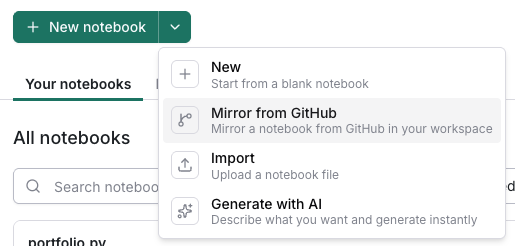
Use GitHub as the source of truth for notebooks by creating synced notebooks.
This lets you add the notebook to your workspace. It also gives you sharing links (and a snippet for an open-in-molab badge) so others can view the notebook on molab, run it on an ephemeral server, or fork it into their own workspace.
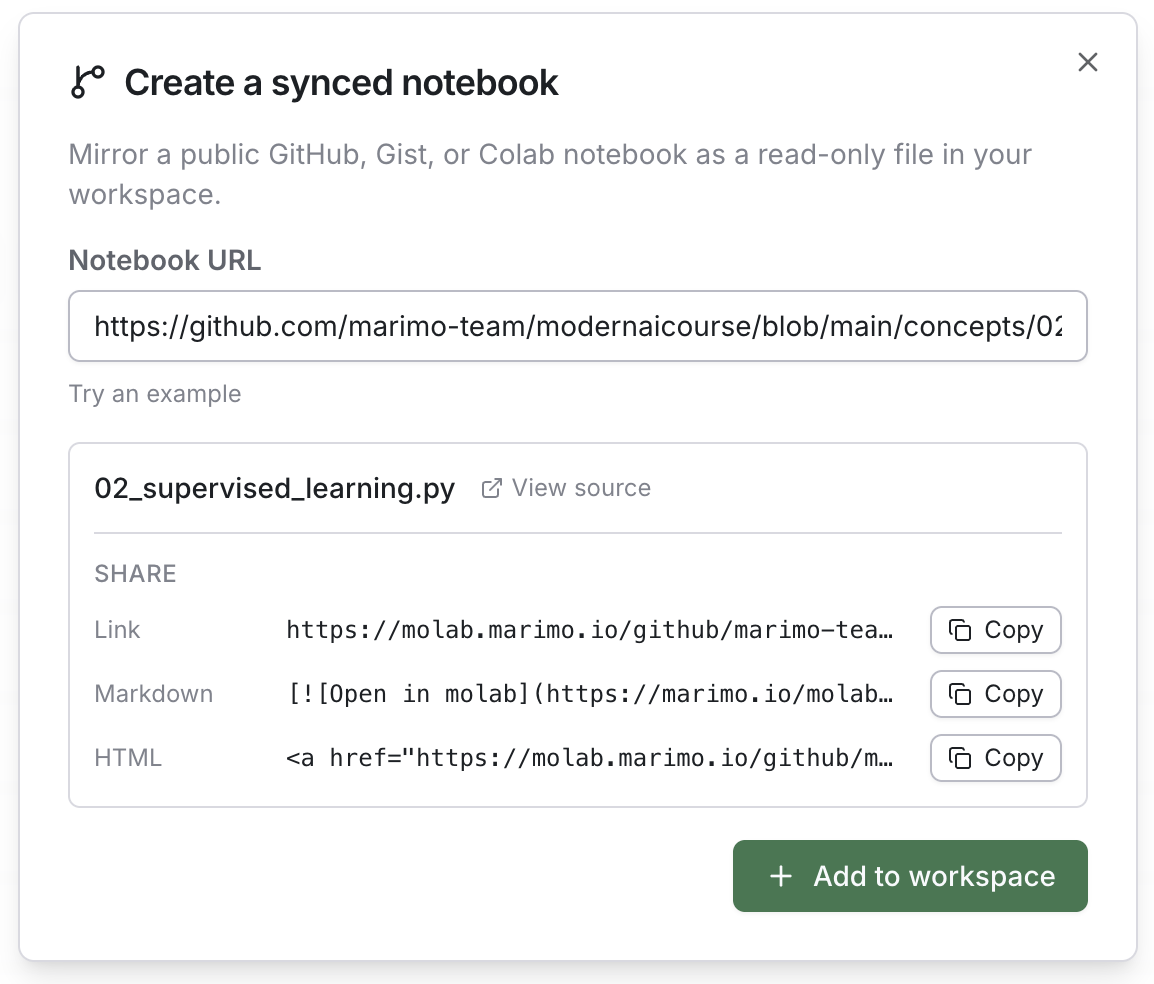
Add mirrored notebooks to your workspace or share them as links or badges.
Static previews
See our gallery examples repository for best practices on previewing notebooks from GitHub.
By default, notebooks mirrored from GitHub show a static preview of the notebook. (The notebook dropdown in the app header allows you to toggle to interactive previews with a running notebook.)
In order for your static preview to include outputs, you must
commit the notebook's corresponding session JSON file, in the __marimo__/session/
directory that exists alongside the notebook. The session is automatically generated when
you run the notebook from the marimo editor; you can also generate the session
from the command-line with marimo export session notebook.py
Share open-in-molab badges
Share links to molab notebooks using our open in molab badge:

Use the following markdown snippet (replace the notebook URL with a link to your own notebook):
[](https://molab.marimo.io/github/marimo-team/gallery-examples/blob/main/notebooks/math/cellular-automaton-art.py)
Share as slides or apps
Every notebook can be shared as interactive slides or a data app:
- To share as a data app, choose "Run as app" from the share button on any running notebook.
- To share as slides, toggle the app preview of a notebook, then select "slides" from the view dropdown near the top of the page.
Discover notebooks from the community
The molab landing page includes a Discover tab showcasing notebooks from the community. Share your notebooks on socials and tag us for a chance to be featured.
Embed in other webpages
You can embed interactive molab notebooks in your own webpages using iframes. Obtain iframe snippets by clicking the share button on interactive molab previews of GitHub notebooks, or construct embeddable URLs yourself using the recipes below.
Embedded notebooks run in the browser via WebAssembly, so your notebook must be WebAssembly-compatible. We also recommend creating these notebooks with
--sandboxto make sure their dependencies get installed.
Embed notebooks from GitHub
Add ?embed=true to an interactive preview URL to get an embeddable notebook:
Embed from source code
You can embed a notebook directly from its source code, without hosting it on GitHub. Compress your notebook code using lz-string and pass it as a URL hash:
For example:
<iframe
    src="https://marimo.app/?embed=true#code/MQAg9BIM4MYE4EsAOAXAUKOBTAjgVwWygFokBPFACwHsA7EAXhACIA+BgZgDoBGABmYYQAEyxIstUbRgIsURiADaQkKpYBbAIaJ11ZgBoVa5lpRIANtRTmEAIwNHVzWnnXkHoNS1jIyHkAC6QhBgaGgIbtRwKCBaOtRhAPqJAOYSWHCaKFjCiQDuCFQKzHxcAEylZYKaSEgKcRHUXACCtQAUaF4wUFCJAGYI5lgMzGB4UHBgljCa5mCJDbpgMOMo1Opc3VAOXpp4a4nC1Hm0lprCDIrMlCjq5swBhgCUYQVFNUhcUFgoeEgAXJ01BEkFEYotqCBNPJdEDVCCwSAXG4yFD5LQkHCQAjorEshYrDZbFxyASYtCQBZ0F4+nB1nizJZrHZNtRLHB5DiYgAZBC0LDaADKWBS6gk2WEAGE2VEtEh9CBeVAJdL2XKsbT6T5yFxJBFNGlsZFcTA6AA3NlmrAKlJ7HoITS0fqDbJwMJoAACH02WHM5jalAQokSptEDAAKnA8FgXqI+iBEm0noCvLouOphG1mNmsaBJb7zHhzNoQM19ussnRS9Ewl5w4H0VYsLZqNQANbQCJFrJyKEgGAF7twKHl0xV8Z8lJ9i2u2LUUTmBWO4Qgca9qhYLFEIsxNZ4ttYKG4t6UBlkolcEAASRieQpfKgSEIORAtlRikdR5iT6wA4CAZQMwoH+CAAA9WXUMBBUSaVaEyYQEDAZUsnGMAKjKDCMI4AAOMoeA4AA2AB2AiCIATj4AAWJ48VEV930FRp+RAWD4IQf8biAkCwHA01IOg1jzgQJ4uCxbNmBeLxsF+OBaHdL1ah9P0AyDLAQ3nYZI2jWMsHjRNkw1WV6iaAguD6WUOi8VMTIQLgEJgFAEDobQyDaABvLErOMb4cmYf45y4UyoBsUQ4DaZDogYPgFWVagkAYCpopAM1ZmjBhKLKGKaDyRIUsLTSoxjQwvK85xEmQ7Jtn8tMgpCjJwpQbQUHSmK1niioFTytKeEorLjly1KCu04qSq8ZgUkQXIoAQAAvLA-IC2rVLCiLmv4JLYvi9akq64ZKL4DbsnigBWDbsoG-KI0Kp4RtGpxlTEKrFts4LloapqGFO1q4oYbbOsG9KDtasRfrO-rdqu4bPJK5hbGmNtytm+bqpsr46pWxrIp4b74o4TLkoB7HoHOiGtKK6HVAAXwVYtbF9EYkG0TQxVdbYbop6A8FsdRCkSWx9jWJ1afp5gAFlNAPL8AEIdhKls4FCnIGAAMVmb4sUktRzLgdQtx+PBZJANptfUfQXjCBTPgHZTA2DUMhpjNA4wTY3ZQM6yvja12da4XbsXkAA5OhrQCjMs0lGwYA7AAqaPxclpqpdjkA91NdtVzqTRKSZCTNdUE8AvEDkEAe2gUBDTQYEoLAsyaiSUxK3KFBN33Bo5iagwUGcMgWDT-Vyq4O6mpGHgVAeyoquRR4TM0rgepBtkeGe56wXyl-HuHqCjxG5oePOQGkg36DaIezfk71rfMJ3dJd0-s6sVJJvdtQyUfoMT6fvWZLki2L4LFS7YaUho7Z2+kG6qDTGHOA4ksT1kPNgSQGRJyUiZizDI8g6aWDyFCPofRfy7mriASw6dlwgDwb6EA1B4wbnvigBUJ5qD7H7JQR0KRkE0OmuobsEoQBD1EmNbM+9D6yXPopS+AC1L22ATpPSSZwHQF0FYQMtApxMBqi9dG71IqHR+vwf6l0CI000JgkYgpFFUEnAYYm4MAZk33nDA2xlAoaLeqtKKXAdHxWwh4-RaVSiHRBqUY6RiTHMAAOJ2mmp+Bx0C+o5VJtdLEswkAsKcUtUKWjmr+Jxr9HxBNLqlAIsE6AR13F8GKcLcwpjzGnmSSwqxUASa2MSV4RmQxAKHjUajYQdIkBHBOJZEqcVHJ0CgJcZgAAhfKxBJTYGZsQAASr5BUzAABqhAgwlyscwcMBQbApBuNsgA8gOR0xAACiTVKDbIDlgOgo8OYQ0mdM2ZAp1CLOWRzSpIwAAKswfjZFlqofeaZKDISjm0RQUAamTgVDEpc5gUmaAVG0gFWAl55EyPFMmCoABWqwEB9DICMVaEkv5HyhIilhcLCxwBRf8jpMUYUqNEVbAs19ZF1ORa+Wl9L2nZCZa2CxKjn6qGdq-IeH8gyiqsokegTA+QoClcIdMmhQJJhogAahADwDmCFHzFjIG-FcTBoVCsoMa5VgqlGTlbvlMetB95eH1RYTQRqh4KBiZal1hrjU0oNna6MDrzajRgHKT1BBzC5DDTUNoqKOmBpDnKp1WsEApCXKBBQVIvhczJFAY2abppzQYG0PROq+A3TIZXX8Mo4AjDyIGQFKbVBqq4BERpxwrX9jlAwGN8psRlwyKCYsIzaAjH5NoOQKAyWjVbe27KbQfVur9d2mova5QKkVUOtkWQnJjucAKIg06EVIoYFyxNzaoTgW+OXNVJdEhUL6EmDmAwUg5tsHmxI5x8XKjaEMPoWSFSIAOWtBUbVfpwqsGsdQUVL3CPoK+2sah4NGwlZNM+v9FJ9DwNIUdHLkpNjgL3BcgzVBFqwP5RVCpaCUbLtR1w5UjrAQHXQg+Kjyqr2ELR1jm9t7ke4woXVNFiCsCRJ8SQ2hMhkHkeJS5Vd+wFn7HFWQ8gs6ZEkPSUWrZsDEH5GmygLYDYAHJ5CTy4DAqSKiFAYi4Opo4Gw4x7HMOXWSKQ2iuY4zkfehKeVbwRuRkAomeDyK8NC2Y5gFCubbYOtIHJSN3SSrQGKSMS0BcgLx-zSMQDaqJmlsAvm+NZZy5ey9HqmA2ewOILI8XRoVbEAKJVYW-Q0r8zvEOd6xkVpa4VuaGaS6-Q5k8RQ-xyMKhG0jAIrJyDPq8L6b4IW1BlbY2+rdsX82JeS8W8KSNNsxn3o0wlKB5BMGUKNNoxAiYXfZmdi7Cousc3O0THg12SptCSld26Vk3sKme59rwpaFQfYe0Te7Z2nsvdUEEGkURsQDoChVcYJI6QTTkL0Ww2gavIdYTXZEjHHqVqgFzRy1hhjMEYlwkdyC9jQcrPQLg9OrF8QsD8Pd5UieFCGCMAAIsHGWGsFtiufA5PdkWVHReyGt77IBsK7dSztzsc0niXv5DlJbfDTTTcvdrEQCpF10pEDAGifIQASFcBkHs4VAwAagDK0aWgoAdiYAhbAwuqwMCdxzLwKvjWKHt22AI1nPh0mUhVtk-o77EB6X1zrlbI8wGj79IbnuSp++T5D9uk1rNYFV5Nclhsh6srMjh13tAJHqTDHY-D-NBjRrlG0WgzMKMlP1zRljwnRNKhVLWuUMnswTMjSuLOneciqllDUEABdo60GjkpywBt5CanUCnQhVdqDfHoPG7I5mcytIZZVBQHlRrPOjDMuZ7ylnCAWqdu6ThgAcD4ARPguCgV3WYMAU6mgn99Bf0f4Aj-hBf4-4wzADYR8CrzP5-bAEwBf4QFp4sDAC4KIECCQGlQIHkKP5AGoG4K2BUTIFwFv64KP4YEoFWQEF9D7T7SYGkHACrzoR4GjSPAczMAnICi0AXJXJX74HAAVCgGwE3634HQwDYR9D0H8Fv4HQiEAFUFjTAD7S4Kf7SHGDACf6EGiE35kG4KnSKG364LQEVDaHwG4JER8D34GFkH7TEFcEiEVAKEkGMFH63L3L+TX7qEgG4F8FiHADQFyHf4kEyG4I+FmFoH7S2FWHkEP5qGv5oGgH6F+FKG6EHSRG-5YBf4HRBE+GUFxECFf7QFUH2FqCUxYg+YN5ihw6b5yAC6vjQidKKh8iHrCiijigj7d41BmR0jqCJA2C-olEhzlFQCKA9FLwBwJTHQERwb6yGzD5SgtFICQro7fBtAIDgB4jqr0DEA6o-ZK5kIw5LHG7qZpD15PABD7ygCqx+hVFRwpyQimDnh2CviRooDEDG6mhqg1BQBYjV7ObG5MBuRrIbL6oLTMBmj-FbIrK7KDD6bTr+TMAoB7KQnMCFFeDzE1HZppDlx9ptCfGOS0BcBon16N4rLAmTRbJK5570BTGj46yxqKDImLHLFaCrEgDrHg40Ta67H0D7E45HHmyejejYa4Z7r4ZmpKKWpDz+Q2YSZwBSZAZCTjDcbUaMY9jMaKrt5ia6jCCSZuq95iwaTEADDOYZD+SVbFgDgm6VyniXwT6FCng0K6DKhKbqC6D0CTxw5ZxtBlBwCarPbqoelek0QFAaZ5Db6CBeA+ZsTjCMBMB8CVEoYF5eAHiyQULlafDBz5rukgAz7hnyA5YKhlAZkHyynZk6qkldCMJlzHZqngptiY6qAuF3Smi0AWjmBWhtDKqRnQAiTQgoBkDiDGxnAoCVoJn8iLhzhhjMCYo1Azr8Ha6cgcnY716KmVSXpQ5qBCITH0A2baCihqptCmg4ZHYJ4VpcBdk9k1x8LCDdniA8mWxF4Cl0BV60qimTTiniYalSlurJbbn+R9D9kKmTzKllyqkSlvlSbakRLjBRJsExJmnyYulVyOjDnL4SAHxYDED4COiORzRXFIUiDrB8gYUlI9jBlFHxjTTbntnRkcyxm55Im0rYAmqVmNQQocx1mjS2gQUOhOj6mug1l3Rtnu4dnHnKinl9nUBZAE5ppaAMBkVaAKi6BjkTlIAhn8GXrQ7DizkFkqI46LlyDLkaxklqlbkMmYl0U5CHmdnCW9nnmXmOxhA+bJA9HJDtnMDJBaB8jJB+RJKKRRil4vBAA"
    sandbox="allow-scripts allow-same-origin allow-downloads allow-popups allow-forms"
    allow="microphone"
    allowfullscreen
    loading="lazy"
>
</iframe>
Query parameters go before the hash:
For small notebooks (under 14 KB), you can also use the code query parameter
with URI encoding instead of lz-compression:
Embed an empty editable notebook
Use this recipe to embed an empty editable notebook:
<iframe
    src="https://marimo.app/?embed=true#code/JYWwDg9gTgLgBCAhlUEBQaD6mDmBTAOzykRjwBNMB3YGACzgF44AiAVwIGsCIqCW0iMGCYJkqAHQBBYQAoAlBjQABIWAkBjPABttacngBmcTAoBcaOFbhQ8MNlAJLgx7AUQg82JsxbYkwATYLBbWcGoSUBwKaEA"
    sandbox="allow-scripts allow-same-origin allow-downloads allow-popups allow-forms"
    allow="microphone"
    allowfullscreen
    loading="lazy"
>
</iframe>
Query parameters
| Parameter | Default | Description |
|---|---|---|
embed=true |
false |
Hides the molab header for a cleaner embed |
mode=edit |
read |
Allows viewers to edit code cells |
include-code=false |
true |
Excludes code entirely (only works with mode=read) |
show-code=false |
true |
Hides code by default, but viewers can still reveal it |
Other features
Package management
Each notebook runs in an environment with several popular packages pre-installed, including torch, numpy, polars, and more. marimo’s built-in package manager will install additional packages as you import them (use the package manager sidebar panel to install specific package versions).
Storage
Notebooks get a limited amount of persistent storage; view the file tree by clicking the file icon in the sidebar. From here you can upload additional data files.
Run notebooks locally
You can download the notebook directory by clicking the download button, also on the top-right. You can also just pass the notebook URL to marimo edit. For example:
Currently, this brings just the notebook file down, and does not include your attached storage.
FAQ
What’s the difference between molab and Google Colab? Google Colab is a hosted Jupyter notebook service provider. molab is a hosted marimo notebook service with more compute and sharing capabilities, and powered by marimo notebooks instead of Jupyter. Unlike Colab, molab also supports embedding interactive notebooks in your own webpages and sharing notebooks as apps and slides, no login required for readers.
Is molab free? Yes.
What compute do I get? By default, each notebook runs with 4 CPUs and 32 GB of RAM. You can attach an NVIDIA RTX Pro 6000 Blackwell GPU (96 GB VRAM) to any notebook using the notebook specs button in the app header. See Compute for details.
Can I use GPUs? Yes. Attach a GPU to any notebook from the notebook specs button in the app header. If you need additional compute beyond what's offered, reach out to us.
Does molab have built-in AI? Yes. The marimo editor's AI features are available in molab with free access to fast open-source models, and you can also connect your own coding agent with marimo pair.
How does molab relate to marimo’s open source notebook? molab is a hosted offering of marimo’s open source notebook with cloud-based compute and sharing capabilities. You can use marimo open source on your own machine or on your own remote servers.
How does molab relate to marimo’s WebAssembly playground? The WebAssembly playground runs notebooks entirely in the browser through Pyodide. This makes for a snappy user experience, at the cost of limited compute and limited support for Python packages. The playground is well-suited for lightweight notebooks and embedding interactive notebooks in documentation, but it is not well-suited for modern ML or AI workflows. molab bridges the gap: develop notebooks with the full power of Python running on a traditional server, and (when compatible) share interactive previews using WebAssembly, which others can fork and develop further using a server-backed notebook.